
Home
  • The Center
    • Profile
    • History
    • Our Namesake
    • Leadership
    • Members
      • Ordinary Members
      • Associate Members
      • Former Members
      • Membership
    • Team
      • Archive
    • Contact the Center
  • Research
    • Research Projects
      • Archive
    • GRADE Center Gender
      • Profile
      • Program
      • Funding Opportunities
      • Projects
      • Project Archive
      • Membership
    • Intersect
    • Cooperations and Networks
    • Visiting Scholars
    • Publications
      • CGC Online Papers
      • Gender, Diversity and Migration
      • Frankfurt Feminist Texts
      • Announcements of the CGC
    • Profile Areas
  • Gender Studies
    • Gender Studies Minor
      • Download
      • Structure and Content
      • Admission and Application
      • FAQ
    • Certificate Gender Studies
      • Download
      • Structure and Content
      • Admission and Application
      • Semester Program
      • FAQ
    • Career Perspectives
    • Networking
    • Mobility
  • Events
    • Overview
    • Cornelia Goethe Colloquia
      • Archive
    • GRADE Center Gender
      • Archive
    • Angela Davis Guest Professorship
      • Archive
    • #4genderstudies
    • Archive
  • Service
    • Statutes
    • CGC Digest
    • Downloads
    • Media
    • KidsBox
    • Press Review
    • Press Contact
  • Friends’ Association
    • About us
    • Cornelia Goethe Award
    • Membership
    • Contact the Associaton
    • Donation account
  • GeFo Hessen
    • News
    • Guiding Principles
    • Rules of Procedure
    • Speaker's Council
    • Membership
    • Contact the Network
en
  • de
  • en
  1. Home »
  2. Events »
  3. Cornelia Goethe Colloquia »
  4. Contact Zones »
  5. The Struggle for Memory - Encounters with Knowledge

The Struggle for Memory - Encounters with Knowledge

Contact Zones
Format: 
Talk
Language: 
German
On-site event
8 July, 2026 - 6:15pm to 7:45pm
Goethe-Uni, Campus Westend, PEG

1.G191

The lecture discusses memory as a contemporary and contested social practice and examines the organizational and institutional conditions underlying conflicts over memory. The point of reference is ethnographic research at Nazi memorial sites (DFG project InWiWa), which demonstrates how memory of the history of violence under National Socialism is constructed, shifted, and (de)institutionalized in the context of the mediation, interpretation, and appropriation of knowledge. The analyses are linked to work on two concepts: the concept of the contact zone as a site of encounter between (knowledge) differences, and the concept of translation, which makes memory understandable as the establishment, negotiation, and displacement of the past. In this way, the focus falls particularly on the material, organizational, and institutional conditions of spaces where the struggle for memory takes place. It becomes apparent, for example, that different bodies of knowledge and approaches, as well as the rules governing their transmission, are disrupted and shifted in contact zones, and that questions regarding who remembers, what is remembered, and what is remembered or forgotten are the result of negotiation, positioning, and (de)institutionalization.
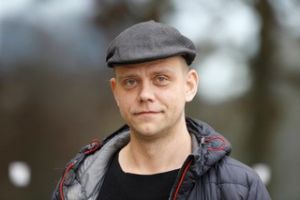
Nicolas Engel
Portrait Nicolas Engel

Nicolas Engel is an educational scientist and holds the Chair of Education with a focus on Organizational Education at FAU Erlangen-Nürnberg. Previously, he was a professor (W1TT) of adult education and organizational research at Goethe University Frankfurt/Main. He earned his doctorate at FAU with an ethnographic dissertation on issues of organizational learning in the context of cultural translation. His research and teaching focus on general pedagogy as well as pedagogical organizational and institutionalization research. Current research projects address, among other things, “Erziehung anach Auschwitz” in shifting constellations of memory, the dynamics of the (de)institutionalization of memory and knowledge transmission, and issues of justice, diversity, and equality in the context of higher education institutions. Another focus is on developing pedagogy as a critical cultural studies discipline.

Host: 
Cornelia Goethe Center
Concept: 
Bettina Kleiner, Christiane Thompson
Coordination: 
Johanna Leinius, Lena Schönmeier
Contact: 
Office

The space is accessible by elevator. There are two accessible restrooms on the first floor (1.G40s and 1.G40h).

There is an all-gender restroom (1.G40n) on this floor with standing and seated toilets. There is also a FLINTA* restroom (2.G40q) on the 2nd floor of the CGC.

The CGC strives to ensure the best possible accessibility for its events. If you require assistance to participate in our event, please let us know your support needs by June 10, 2026, via email to cgcentrum@soz.uni-frankfurt.de. We will then do our best to mitigate any barriers within our capabilities.

You are welcome to attend this event with your children. Please contact us at the email address above by June 10, 2026, if you would like us to arrange childcare as well. We look forward to your participation.

  • Overview
  • Cornelia Goethe Colloquia
    • Archive
  • GRADE Center Gender
  • Angela Davis Guest Professorship
  • #4genderstudies
  • Archive

Poster Collioquia summer term 2026

Greenhouse, plant meets plastic © Photo: Mev Skuroshi

29.04.2026
Baldwin Today – Who's Speaking?
06.05.2026
Putting Consent Back in Its Place
13.05.2026
The Construction of the Unspeakable as an Anti-Feminist Strategy (Not Only) in Educational Contexts
10.06.2026
Philosophy and Racism
24.06.2026
Sexual Liberation in Feminist Thought
08.07.2026
The Struggle for Memory - Encounters with Knowledge

Cornelia Goethe Center
for Gender Studies

Goethe-Universität Frankfurt
Campus Westend | PEG 4 | 2.G 154
Theodor-W.-Adorno-Platz 6
D-60629 Frankfurt am Main

Phone: +49 (69) 798 35100
Email: cgcentrum@soz.uni-frankfurt.de

  • The Center
  • Research
  • Gender Studies
  • Events
  • Service
  • Friends’ Association
  • GeFo Hessen
  • Contact
  • Legal Notice
  • Privacy
  • Login